
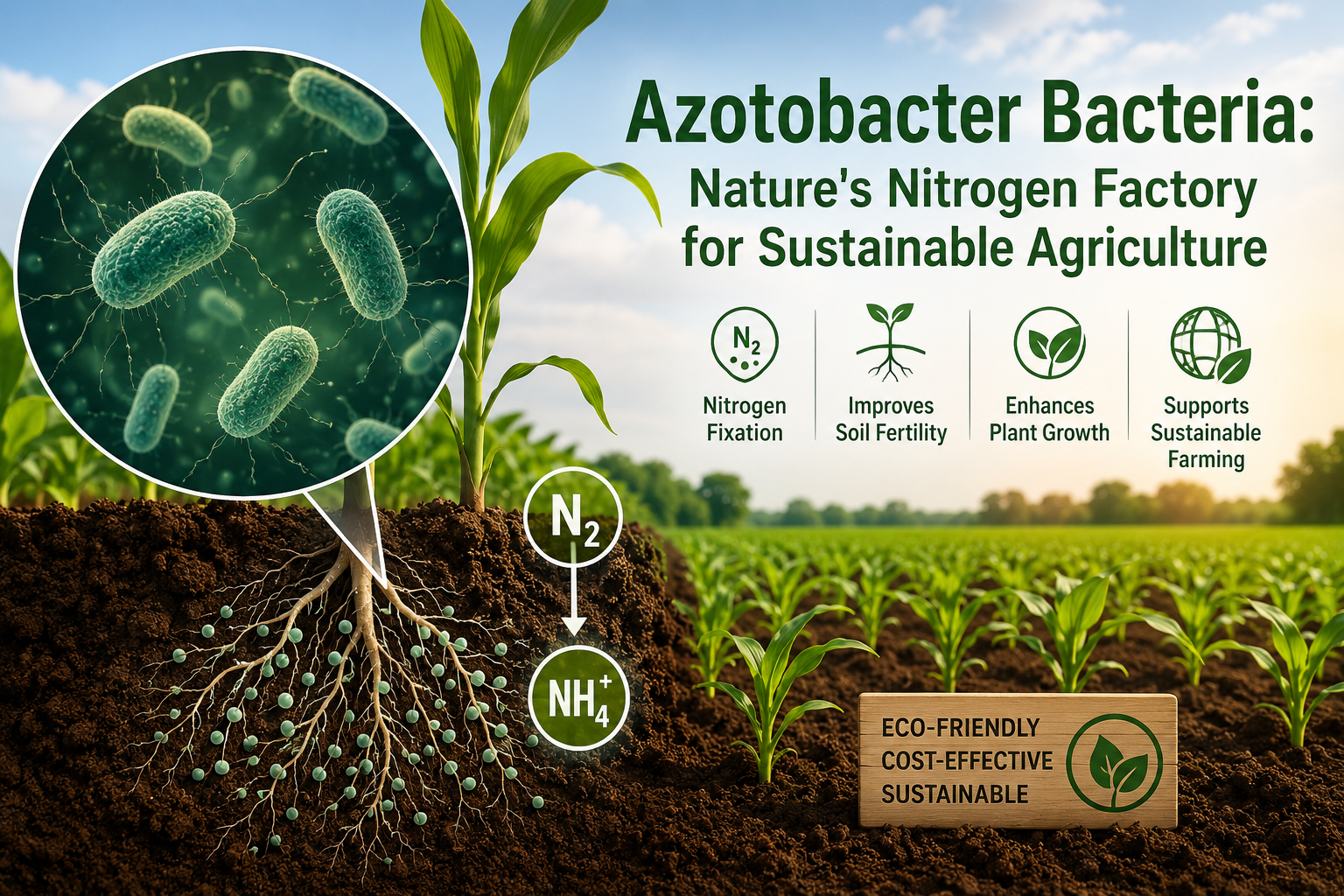


Azotobacter Bacteria: Nature’s Nitrogen Factory for Sustainable Agriculture
Introduction
In the pursuit of sustainable and environmentally friendly farming, Azotobacter has emerged as one of the most valuable beneficial soil bacteria. Often referred to as a “natural nitrogen factory,” Azotobacter plays a crucial role in enhancing soil fertility, improving crop growth, and reducing dependence on chemical fertilizers.
As farmers increasingly adopt eco-friendly agricultural practices, Azotobacter-based biofertilizers have become an essential component of modern integrated nutrient management.
What is Azotobacter?
Azotobacter is a group of free-living, aerobic bacteria naturally present in fertile soils. Unlike bacteria that require a symbiotic relationship with legumes, Azotobacter can independently fix atmospheric nitrogen and convert it into forms that plants can readily absorb.
These beneficial microbes thrive in well-aerated soils rich in organic matter and are suitable for a wide range of agricultural and horticultural crops.
How Does Azotobacter Benefit Plants?
1. Natural Nitrogen Fixation
Azotobacter captures nitrogen from the atmosphere and converts it into ammonia, supplying plants with an essential nutrient required for healthy growth.
2. Promotes Root Development
The bacteria produce natural plant growth hormones such as:
- Auxins
- Gibberellins
- Cytokinins
These hormones stimulate stronger root systems, allowing plants to absorb water and nutrients more efficiently.
3. Improves Soil Fertility
Azotobacter enhances microbial activity within the rhizosphere, resulting in:
- Better nutrient cycling
- Increased organic matter decomposition
- Improved soil structure
- Enhanced soil biological health
4. Enhances Seed Germination
Seed treatment with Azotobacter often results in:
- Faster germination
- Better seedling vigor
- Uniform crop establishment
5. Produces Growth-Promoting Substances
The bacteria synthesize vitamins, amino acids, and other bioactive compounds that improve overall plant metabolism and vigor.
6. Helps Solubilize Nutrients
Certain strains assist in making phosphorus and micronutrients more available to plants, improving nutrient-use efficiency.
Suitable Crops
Azotobacter is effective in numerous crops, including:
- Rice
- Wheat
- Maize
- Cotton
- Sugarcane
- Potato
- Tomato
- Chilli
- Brinjal
- Onion
- Cabbage
- Cauliflower
- Banana
- Mango
- Grapes
- Flowers
- Plantation crops
Application Methods
Seed Treatment
Coat seeds with the recommended dose of Azotobacter culture before sowing.
Seedling Root Dip
Dip seedlings in an Azotobacter suspension for 20–30 minutes before transplanting.
Soil Application
Mix Azotobacter culture with compost or farmyard manure and apply uniformly to the field.
Drip Irrigation
Liquid formulations can also be applied through drip irrigation systems where recommended.
Advantages of Using Azotobacter
- Reduces dependence on chemical nitrogen fertilizers
- Improves crop yield
- Enhances soil microbial diversity
- Promotes healthy root growth
- Improves nutrient uptake
- Eco-friendly and sustainable
- Cost-effective nutrient management
- Safe for humans, animals, and the environment
Best Conditions for Azotobacter
Azotobacter performs best when:
- Soil contains adequate organic matter
- Good aeration is maintained
- Soil moisture is optimal
- Soil pH is between 6.5 and 8.0
- Excessive chemical pesticide use is avoided
Why Farmers Should Adopt Azotobacter
Modern agriculture demands higher productivity with lower environmental impact. Azotobacter helps farmers achieve this balance by naturally supplying nitrogen while improving soil health and plant resilience.
By integrating Azotobacter into regular farming practices, growers can reduce fertilizer costs, improve long-term soil productivity, and contribute to sustainable agriculture.
Conclusion
Azotobacter is one of nature’s most effective biofertilizers. Its ability to fix atmospheric nitrogen, stimulate plant growth, improve soil fertility, and enhance crop productivity makes it an indispensable ally for modern farming. Whether cultivating cereals, vegetables, fruits, or plantation crops, incorporating Azotobacter into crop management practices is a smart investment for healthier soils, stronger plants, and a more sustainable agricultural future.